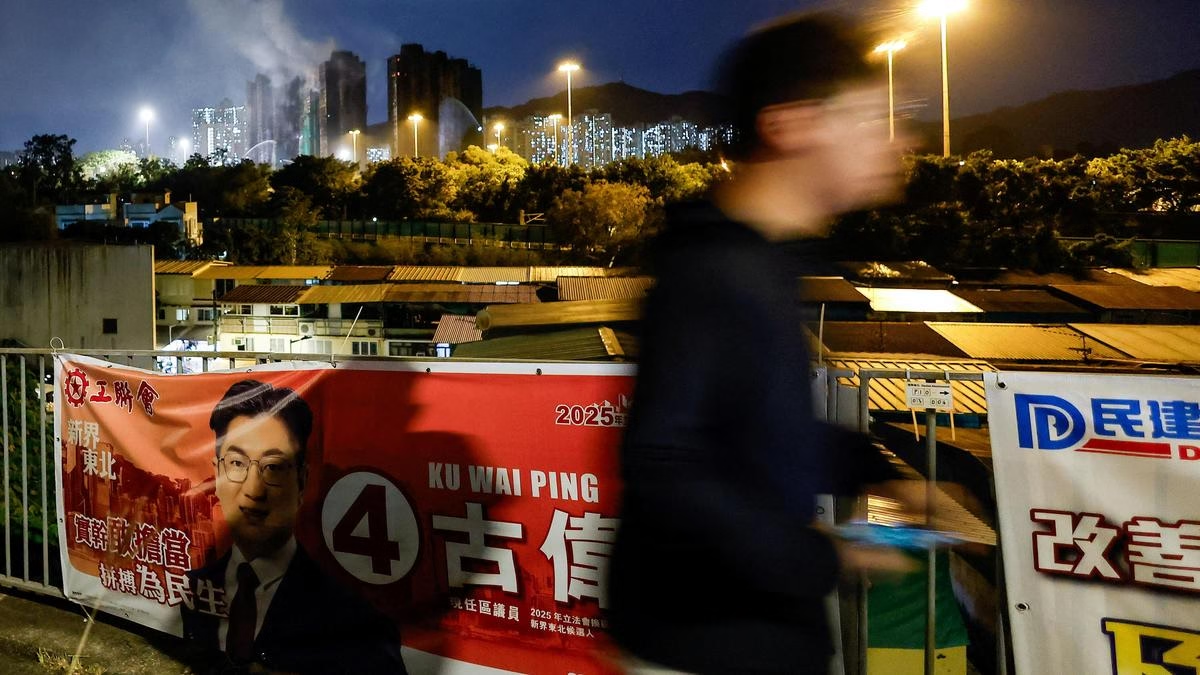
Volunteers distributed flyers outside subway stations on Friday, but most passersby ignored them. Authorities had suspended campaigning for several days after the fire.
“This accident can influence election attendance … people don’t have the interest or eagerness to vote,” said 82-year-old retiree C.K. Lau.
Analysts say the vote will act as a test of public confidence in the government as it faces anger over the fire and continues to enforce a wide-ranging national security crackdown.
Residents remain shocked and frustrated after authorities confirmed that substandard renovation materials in the Tai Po residential tower intensified the blaze. “Everyone’s mood is so heavy right now,” said 48-year-old May Li. “How can we still talk about holding an election? It definitely should be postponed.”
The last Legislative Council election in 2021 saw a record-low turnout of 30.2%, the lowest since Hong Kong returned to Chinese rule in 1997.
On Thursday, Hong Kong’s national security office urged citizens to vote, calling participation vital for post-disaster recovery. “If you truly love Hong Kong, you will vote sincerely,” its statement said.
The Independent Commission Against Corruption said four people were arrested this week for inciting others not to vote. Three others were detained earlier on November 20 for the same offence. Publicly encouraging a boycott has been criminalised since 2021 under electoral reforms designed to eliminate pro-democracy participation.
Authorities have also warned against attempts to “exploit” the disaster to spark unrest similar to the 2019 protests.
Beijing’s 2020 national security law and subsequent electoral reforms ensure that only “patriots”—pro-Beijing candidates—can run for office, sharply limiting democratic participation. Many pro-democracy voters, who once accounted for roughly 60% of the electorate, have since disengaged from the process.
Registered voters for Sunday’s election stand at 4.13 million—the fourth consecutive annual decline since registration peaked at 4.47 million in 2021.
The current Legislative Council term ends on December 31. A delay in elections could create a legislative vacuum, complicating the functioning of the government.