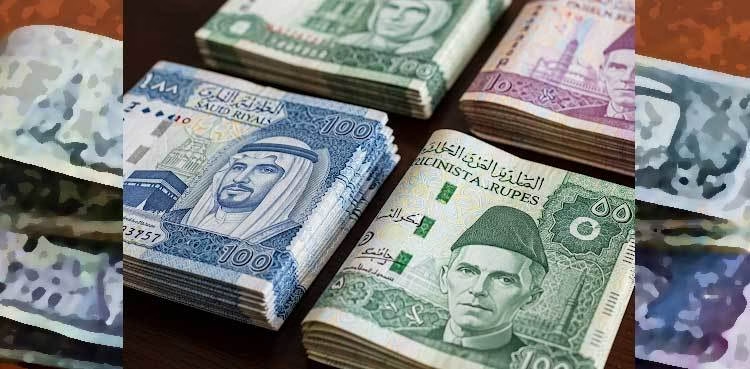
The Saudi Riyal (SAR) declined to Rs74.77 in Pakistan’s open market today, slipping from Rs74.83 on December 2 and sitting well below its July 28 peak of Rs76.03, according to currency dealers. The selling rate also adjusted downward to Rs75.34.
This noticeable drop, driven by market fluctuations and sustained pressure on remittances, underscores the Riyal’s central role in Pakistan’s economic activity.
The SAR remains vital for millions of Pakistani households, with expatriates in Saudi Arabia working across construction, healthcare, and hospitality. According to the State Bank of Pakistan, Saudi Arabia sent $913.3 million in remittances in May 2025, making it the largest contributor that month. From July 2024 to May 2025, Pakistan received $34.9 billion in remittances — a 28.8% increase from the previous year.
At the new rate of Rs74.77, 1,000 SAR now fetches Rs74,770, compared to Rs74,830 yesterday — tightening budgets for families relying on these funds for education, healthcare, and daily expenses.
The Riyal’s depreciation brings mixed effects for Pakistan’s economy. While households feel the immediate pinch, importers of Saudi oil and petrochemicals benefit from lower costs, easing pressure on the trade deficit. On a macro level, the weakened Riyal strengthens Pakistan’s foreign exchange reserves, which exceeded $11 billion by October 2024. This gives policymakers more room to manage inflation and debt, while a softer Rupee boosts Pakistan’s export competitiveness.
Saudi Riyal and Pakistani Rupee: A Quick Overview
The Saudi Riyal (SAR)—divided into 100 halala—is regulated by the Saudi Central Bank and pegged to the US dollar, ensuring stability that makes it ideal for global transactions and remittances.
The Pakistani Rupee (PKR), symbolized as ₨, has been Pakistan’s official currency since 1948. Managed under a guided floating system by the State Bank of Pakistan, it responds to inflation trends, trade flows, and remittance inflows.
Outlook
The SAR’s fall to Rs74.77 reflects ongoing market uncertainty, but strong remittances and robust Pakistan–Saudi economic ties continue to support stability. Policymakers will closely monitor upcoming movements, as shifts in this exchange rate influence remittances, imports, and economic planning.
Despite temporary fluctuations, the Saudi Riyal remains a crucial pillar for millions of Pakistani families and a significant driver of Pakistan’s economic resilience.