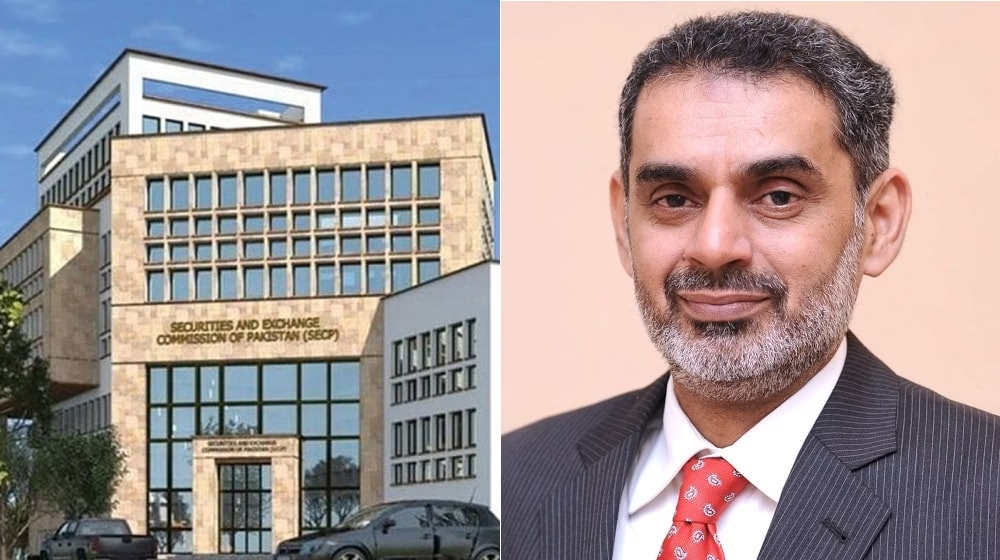
The ongoing SECP Policy Board review has taken a dramatic turn as the Board unanimously rejected every agenda item presented by SECP Chairman Akif Saeed. This development has sparked debate over regulatory governance, transparency, and internal accountability within Pakistan’s top financial watchdog. The SECP Policy Board review became a major point of discussion after the Chairman rated his own performance—and that of three Commissioners as Excellent,raising serious concerns about oversight and credibility.
A Meeting That Lasted Less Than 30 Minutes
According to insiders, the extraordinary meeting held at the SECP Headquarters lasted under half an hour. The SECP Policy Board review process came to an abrupt halt as the Board members unanimously dismissed all agenda items placed before them. What surprised everyone was the timing: the Chairman is just days away from completing his tenure on December 12, making the proposals appear rushed and controversial.
Self-Evaluation Raises Eyebrows
One of the most debated points during the SECP Policy Board review was the Chairman’s self-evaluation. Akif Saeed had graded himself and all three Commissioners as Excellent, raising concerns about a lack of objectivity. The Board immediately deferred the evaluation, emphasizing that such an exercise must be handled transparently and at an appropriate time.
What Was on the Agenda — And Why It Was Rejected
The agenda included several significant proposals, all of which were declined. Among the key items rejected during the SECP Policy Board review were:
- Upgrading Directors’ official vehicles from 1.3cc to 1.5cc
- Removing federal cabinet approval for foreign tours of SECP officials
- Revising the HR manual to eliminate the bell-curve performance evaluation system
- Introducing a Voluntary Separation Scheme (VSS) with heavy payouts for employees opting for early retirement
Board members argued that these proposals lacked urgency, strategic justification, and timing. They also pointed out that approving such moves during the Chairman’s final week in office could raise doubts about the motives behind them.
Concerns Over Evaluation and Oversight
Among the proposals, the removal of the bell-curve evaluation model drew serious concern. This move, according to officials present in the meeting, could have allowed underperformers—or close associates of certain executives—to avoid being flagged during performance assessments. The SECP Policy Board review highlighted that weakening evaluation criteria could negatively affect institutional performance and credibility.
Similarly, the proposal to bypass the federal government’s approval for foreign travel contradicted existing government regulations. All official overseas visits by regulators require cabinet clearance, and the Board saw no reason for the SECP to seek exemptions from this rule.
Past Controversies Add Pressure
Recent controversies surrounding the SECP intensified the Board’s position. Earlier, the SECP approved extraordinary salary increases for top officials, including the Chairman and Commissioners. These raises were granted with backdated effect, drawing public criticism and raising questions about accountability.
Additionally, the approval of Rs. 7 million for Islamabad Club membership for outgoing Commissioner Abdul Rehman Warraich raised further concerns. Such decisions put the SECP under scrutiny, making the Board unwilling to approve more potentially controversial proposals.
One Board member reportedly stated that they are answerable to parliamentary committees for such decisions. Given the public backlash and political sensitivity, approving new benefits or structural changes at such a time would not be justifiable.
A Farewell Without Approvals
With all seven agenda items rejected, the meeting ended with a brief farewell to Chairman Akif Saeed. Not a single proposal moved forward. The SECP Policy Board review underscored the institution’s commitment to safeguarding transparency, especially during transitions in leadership.
What This Means for SECP’s Future
The rejection of the entire agenda sends a strong message about governance discipline. It indicates that the SECP Policy Board is unwilling to endorse hasty or poorly justified decisions, especially those introduced at the end of a tenure. This approach may help restore confidence in the regulator at a time when public trust has been strained.
Furthermore, the Board’s stance highlights a renewed focus on accountability and compliance with broader government policies. The upcoming leadership will now face pressure to prioritize transparency, stronger internal controls, and unbiased performance evaluations.
The SECP Policy Board review marks a significant moment in Pakistan’s regulatory landscape. With all agenda items rejected and the Chairman nearing the end of his tenure, the Board has taken a firm stand in favor of institutional integrity. How the SECP navigates leadership transition and rebuilds public trust will determine the future of regulatory governance in Pakistan.