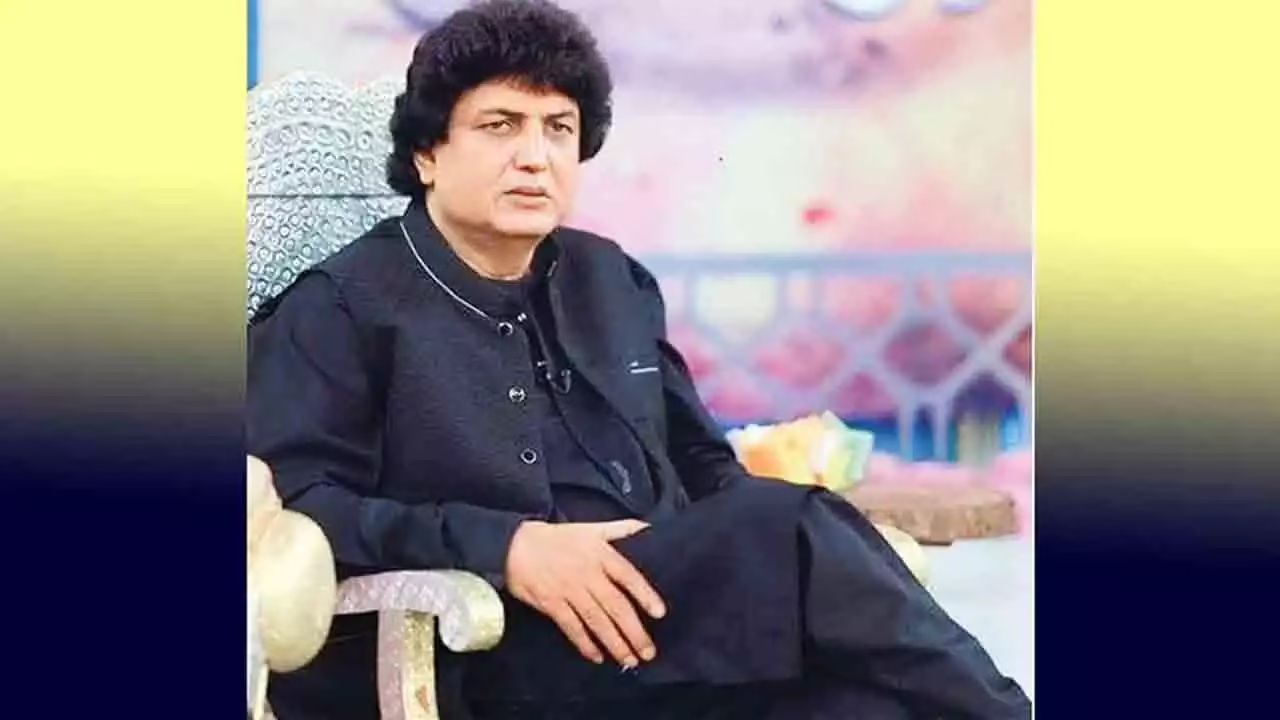
The Khalil ur Rehman Qamar case has taken another significant turn as a sessions court in Lahore seeks a police report regarding allegations of fake bail bonds and the circulation of an inappropriate video on social media. The matter, which has been under debate both legally and publicly, continues to reveal new complexities. With the court now requesting further investigation, questions are growing about accountability, misuse of legal processes, and the role of law enforcement in handling high-profile complaints.
Court Seeks Detailed Police Report
During the latest hearing, Sessions Judge Muhammad Kashif directed the police to submit a comprehensive report on the next scheduled date. The proceedings were then adjourned until December 16. This move indicates that the court wants a clearer understanding of the allegations and the actions taken — or not taken — by the police so far.
The case revolves around petitioner Khalil-ur-Rehman Qamar, a well-known writer and television personality, who has accused Hassan Shah of submitting fake bail bonds in a prior NCCIA case. According to the petition, Shah was initially granted bail, but the documents he submitted to secure that bail were allegedly fraudulent.
Allegations of Fake Bail Bonds
One major issue raised in the Khalil ur Rehman Qamar case is the claim that the accused, Hassan Shah, deceived the court by presenting falsified bail documents. Submitting fake bail bonds is considered a serious offense, as it undermines the integrity of the legal system and allows accused individuals to evade lawful scrutiny.
The petitioner argues that such actions should not go unpunished and that allowing fraudulent documentation sets a dangerous precedent. The court’s decision to seek a police report suggests that it is taking the allegations seriously and intends to determine how the false documents were accepted and whether officials failed to verify them properly.
Complaint Filed but No FIR Registered
Another concerning element in the Khalil ur Rehman Qamar case is the claim that the police failed to register an FIR when Qamar first approached them. According to the petition, he filed a complaint at the Islampura police station, but officers allegedly did not initiate formal action against the accused.
The refusal or delay in registering a First Information Report is a common complaint in the Pakistani justice system, often raising doubts about impartiality or external influence. If it is proven that the police deliberately avoided registering the case, it could lead to disciplinary measures and further legal consequences.
The petitioner has therefore asked the court to instruct the police to immediately register a case against the accused so that legal proceedings can begin properly.
Alleged Inappropriate Video Circulated Online
One of the most sensitive and alarming claims in the Khalil ur Rehman Qamar case is the allegation that Hassan Shah made an inappropriate video of the petitioner and circulated it on social media. If proven, this would constitute a serious violation of privacy, defamation, and possibly cybercrime laws.
In recent years, Pakistan has strengthened its regulations regarding digital harassment, including provisions in the Prevention of Electronic Crimes Act (PECA). Sharing private or explicit content without consent is a punishable offense. Such actions not only harm an individual’s reputation but can also lead to severe psychological and professional damage.
Qamar’s legal team maintains that the video was used maliciously to harm his public image. For a public figure frequently involved in national discussions and media debates, such an incident carries even greater weight.
Growing Concerns About Justice and Accountability
The Khalil ur Rehman Qamar case highlights several long-standing challenges in Pakistan’s legal system. These include delayed investigations, inconsistent police responses, and the misuse of digital platforms to target individuals. Public interest in the case continues to grow because it raises broader concerns: How easily can fake documents be used to manipulate judicial processes? Why did the police not take immediate action when a citizen — especially one alleging serious cybercrime — submitted a complaint? And what safeguards exist to ensure citizens are protected from targeted digital harassment?
As the December 16 hearing approaches, all eyes remain on the police report the court has requested. The findings will determine the next steps and whether charges will be formally pursued.
The Khalil ur Rehman Qamar case is more than just a dispute between two individuals. It touches upon critical issues within the justice system — from fake bail bonds to digital abuse and police inaction. With the court now actively seeking clarity, the coming weeks will be crucial in determining whether justice is served and how effectively institutions respond to allegations involving both legal fraud and cyber misconduct.