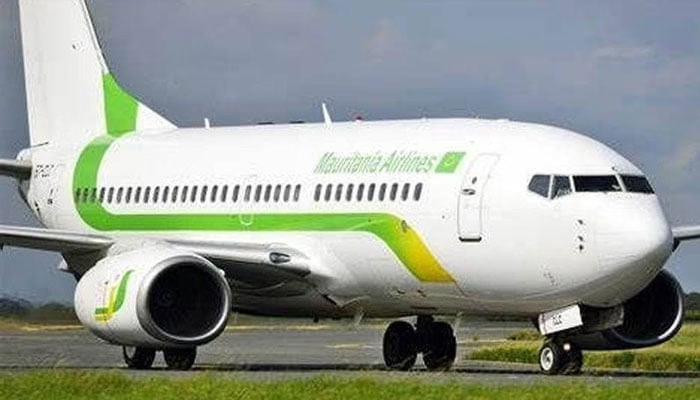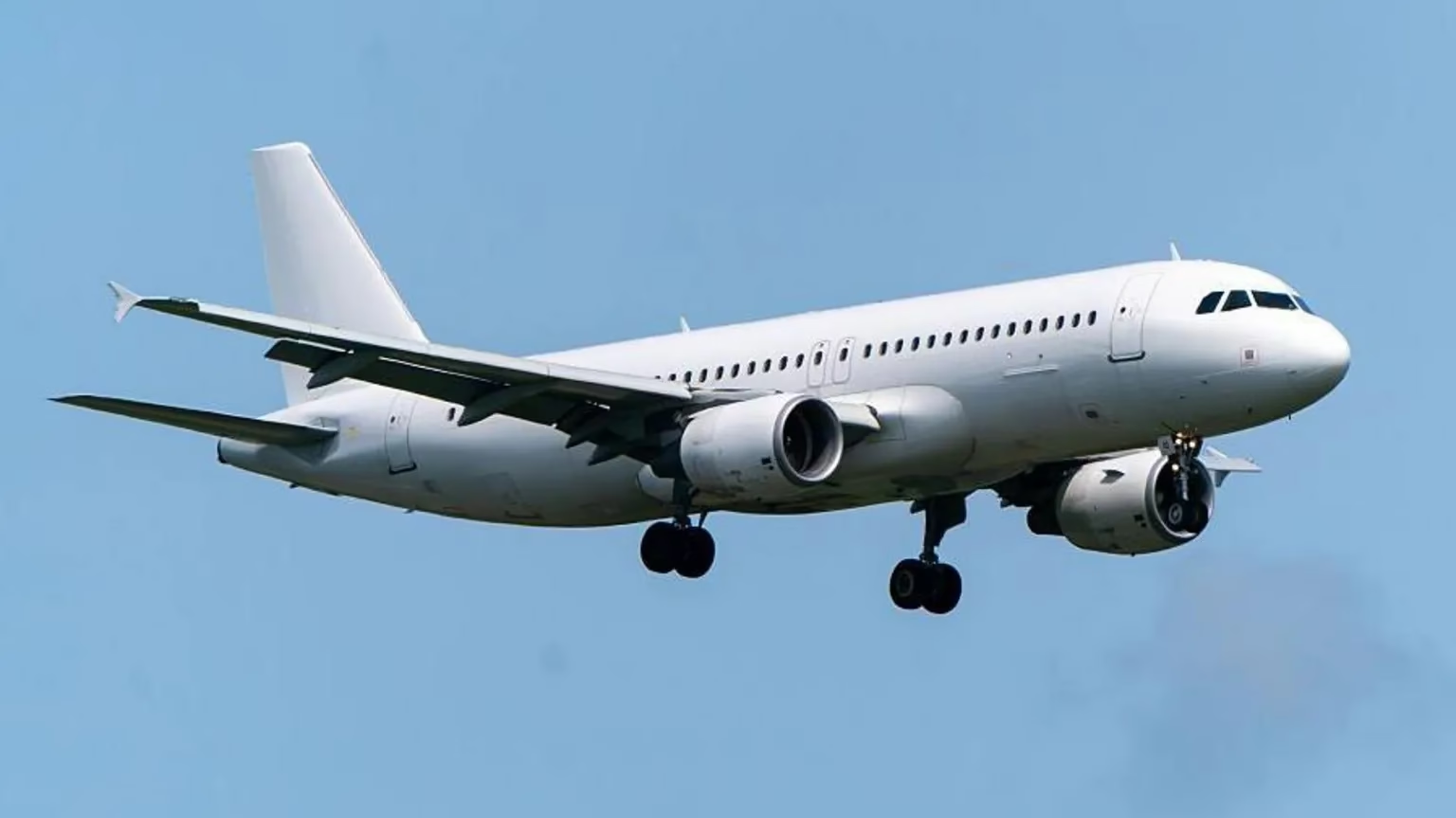
The recent Airbus software update has become a major aviation story worldwide, as thousands of Airbus aircraft faced temporary groundings following concerns over solar radiation interfering with onboard computers. With more than 6,000 A320-family planes affected, airlines moved quickly to apply critical fixes and keep global operations running smoothly. The Airbus software update not only resolved a significant safety risk but also highlighted how closely modern aviation depends on advanced digital systems.
Why the Airbus Software Update Was Needed
The urgency for the Airbus software update began after an incident involving a JetBlue Airways aircraft flying between the US and Mexico in October. The plane suddenly lost altitude and made an emergency landing, injuring at least 15 passengers. Investigations revealed that the onboard system responsible for calculating elevation had received corrupted data at high altitude.
Airbus traced the issue to intense bursts of solar radiation that periodically interfere with certain aircraft computer components. The A320 family including the A318, A319, A320 and A321 were found to be vulnerable under specific conditions.
This discovery prompted Airbus to instruct airlines around the world to immediately apply the Airbus software update to ensure safety and prevent similar incidents.
Global Response to the Update
The aviation world acted quickly. Airlines in Europe, the US, Asia, and Australia coordinated overnight operations to apply the Airbus software update across their fleets. French Transport Minister Philippe Tabarot said that more than 5,000 aircraft had been updated smoothly, with fewer than 100 still pending.
Airbus CEO Guillaume Faury apologized to airlines for the “logistical challenges and delays,” but emphasized that passenger safety remained the top priority. Teams worked around the clock to ensure that the Airbus software update reached every operator as fast as possible.
Impact on Major Airlines
Some airlines experienced delays, while others managed to avoid major disruptions:
- Air France saw multiple flight delays and cancellations at Charles de Gaulle Airport.
- American Airlines anticipated minor operational delays but expected most updates to be completed within a day.
- Delta Airlines reported limited impact on its schedule.
- British Airways, Air India, and several UK-based carriers were not heavily affected.
- EasyJet and Wizz Air announced that most of their fleets received the Airbus software update overnight, allowing normal operations to continue.
- Jetstar in Australia cancelled 90 flights, while Air New Zealand briefly grounded its Airbus A320 aircraft until updates were completed.
Airports in the UK including Heathrow, Manchester, and Luton reported minimal disruption, showing how effectively airlines coordinated to deploy the Airbus software update.
Older Aircraft Still Grounded
While most modern A320-family aircraft required only a simple Airbus software update, about 900 older planes need a complete computer replacement. These aircraft remain grounded until new hardware becomes available.
The timeline for replacing these computers will depend on manufacturing capacity and global demand, meaning some older jets may be out of service for days or even weeks.
Understanding the Technical Issue
At the heart of this situation is how an aircraft’s flight computer interprets altitude data. Modern planes rely on extremely sensitive sensors and processors. When exposed to rare bursts of intense solar radiation, some components may read corrupted data, causing the system to miscalculate elevation.
The Airbus software update corrects the way the system filters, validates, and calculates altitude. It also ensures the aircraft can detect potential data corruption and switch to safe backup modes without affecting flight stability.
This update demonstrates how technology must constantly adapt to natural phenomena even events occurring 150 million kilometers away on the Sun.
A Safety Success Story
Although the grounding of thousands of planes created short-term disruptions, the rapid deployment of the Airbus software update is widely seen as a success for aviation safety. The industry acted decisively, with manufacturers, regulators, and airlines working together to prevent a rare but potentially dangerous risk.
The situation also highlights the complexity of modern aircraft: a single software issue linked to solar activity can affect flight operations around the globe.
The worldwide rollout of the Airbus software update has restored normal operations for thousands of aircraft and reassured travellers about aviation safety standards. Despite the temporary disruptions, the coordinated response ensured that flights could resume quickly and safely. As aviation technology evolves, updates like this remind us of the constant vigilance required to keep global air travel secure, reliable, and resilient in the face of unexpected natural challenges.